Assassin Bug Bite: Symptoms, Danger & Treatment (2026)
Assassin bug bites hurt immediately and intensely — often compared to a wasp or hornet sting — but the pain itself is rarely dangerous. The real question people are actually searching for is whether the bug that bit them was a kissing bug, the blood-feeding subgroup that can carry the parasite behind Chagas disease. Here's how to tell the difference and what to actually do next.
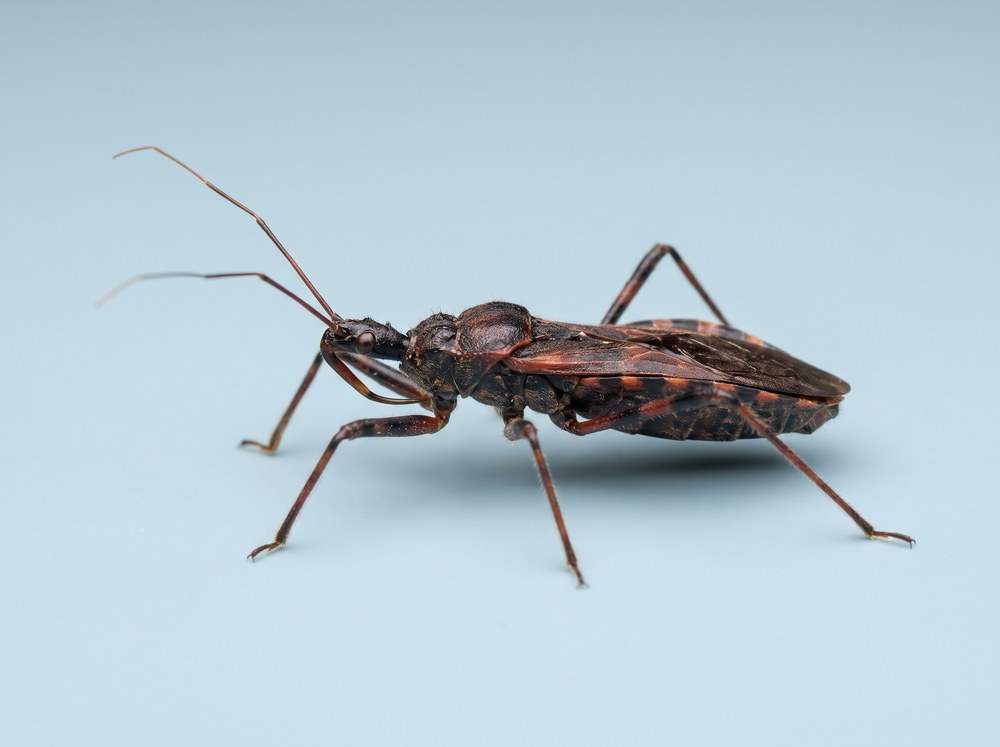
Is it dangerous?
The majority of assassin bug bites are painful, defensive stabs from predatory species — like the wheel bug or masked hunter — that resolve on their own within a few days to a week. Most people never see a doctor for these bites; the injury is a sharp, localized reaction rather than a systemic one, and this illustrated guide to assassin bug bites is a useful reference if you want to compare your own reaction against typical cases.
The two genuine risks sit at opposite ends of the same insect family. First, a small number of people develop an allergic reaction — including anaphylaxis — especially after repeated bites have sensitized their immune system; this is uncommon but can escalate quickly. Second, the Triatominae subfamily, commonly called kissing bugs, feed on blood rather than biting defensively, and roughly a third to half of individual kissing bugs in some U.S. surveys carry the parasite that causes Chagas disease. The bite itself doesn't transmit the parasite — infection happens when the bug's feces get rubbed into the wound, eyes, or mouth.
Children, older adults, and anyone with a known history of insect-sting allergy are at higher risk for a severe local or systemic reaction to a defensive bite. Separately, people living in or near homes with wood, adobe, or brush construction in the southern United States face somewhat higher exposure to kissing bugs specifically, since these insects tend to hide in wall cracks and emerge at night.
Bottom line: monitor a fresh bite for the first 24 to 48 hours. If swelling spreads well beyond the bite site, breathing feels tight, or hives spread across your body, treat it as a medical emergency rather than waiting to see if it passes.
Should You See a Doctor?
A short decision tree based on CDC and Mayo Clinic guidance.
1 / 3 Is your face, lips, throat, or tongue swelling, or are you having any trouble breathing?
2 / 3 Are you developing hives across your whole body, dizziness, or a racing heartbeat?
3 / 3 Has the redness, warmth, or swelling been getting steadily worse for more than 48 hours, or do you suspect the bug was a kissing bug that fed on your face overnight?
What the assassin bug bite looks like
The pain comes first, and it's not subtle. People bitten by a defensive assassin bug — most often a wheel bug that's been handled or stepped on — describe an immediate, sharp, burning sensation, sometimes rated as more painful than a bee or wasp sting. This is a mechanical stab from the insect's rigid proboscis combined with a dose of its digestive saliva, not a true venomous sting.
Within minutes, a raised red welt forms with a visible puncture mark at the center. The surrounding skin often swells noticeably, sometimes spreading to an inch or more across, and the area can feel hot to the touch. There's no reliable bull's-eye pattern or blister that appears consistently — the presentation is closer to a large, angry mosquito bite than anything with a distinctive shape.
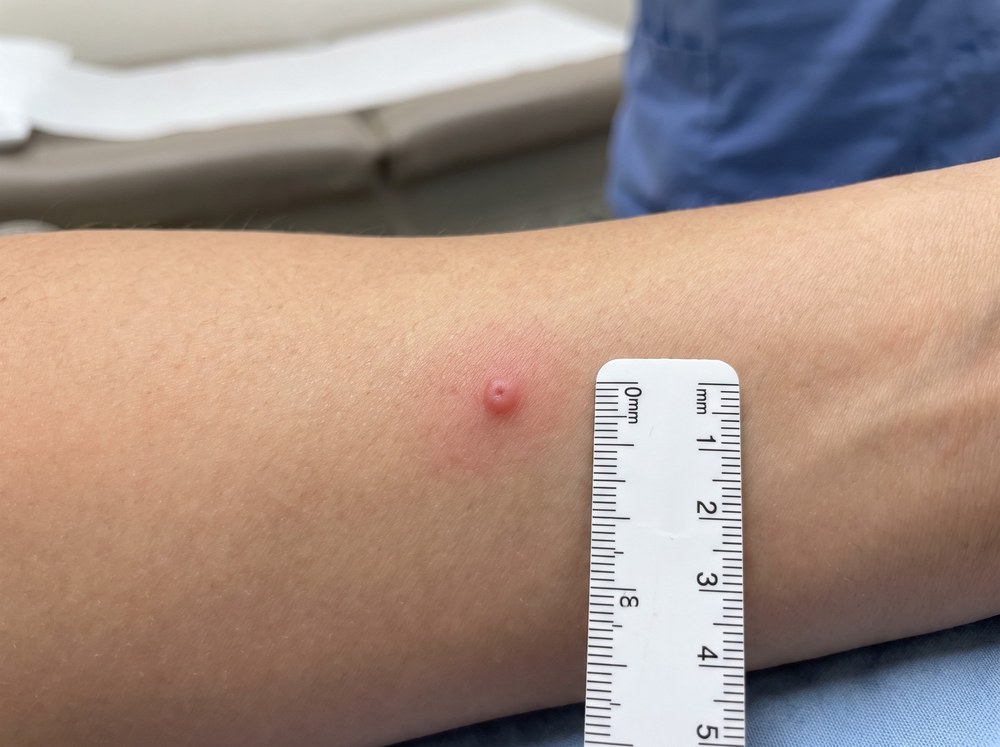
Kissing bug bites look and feel completely different, which is the single biggest source of confusion. These blood-feeding relatives inject an anesthetic in their saliva, so the bite itself is usually painless, and the person often doesn't notice until the next morning. The marks tend to appear as one or a few small puncture points, sometimes in a rough line, most often on the face near the mouth or eyes.
Because both types are technically "assassin bugs," people frequently misattribute a painless facial mark to the same bug that gave them a painful hand or arm welt, or vice versa. The mouthpart structure is actually the reliable tell: predatory species have thick, sturdy mouthparts built to stab prey, while kissing bugs have thinner mouthparts built for a slow, undetected blood draw.
Wondering how serious yours actually is?
Run the Symptom CheckerSymptom timeline
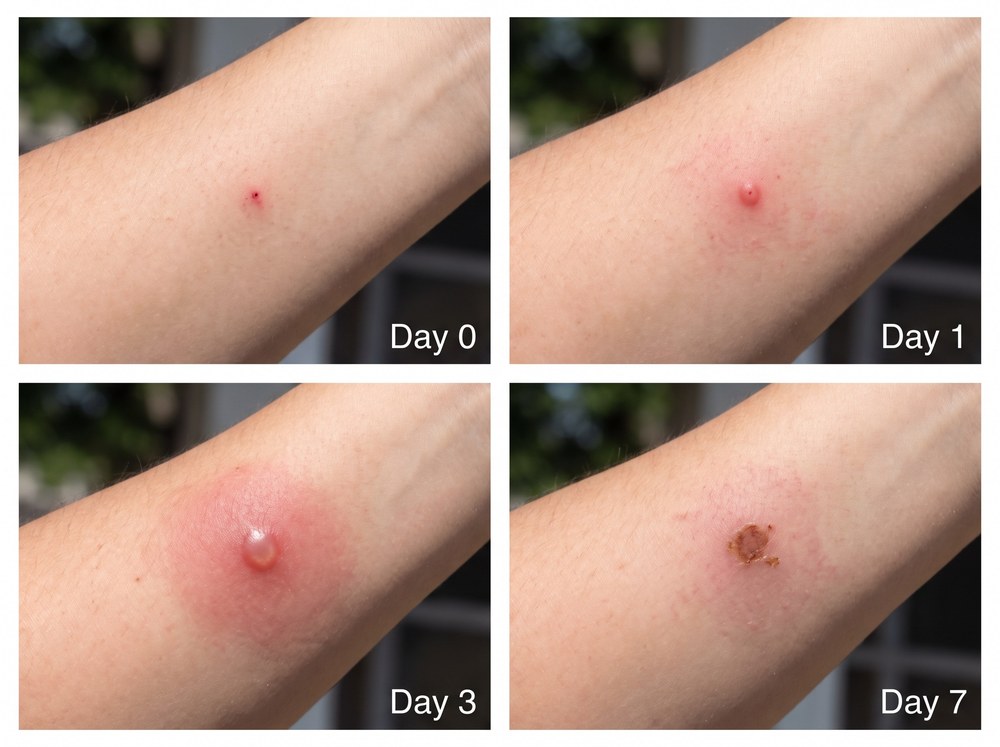
Hours 0–2. Sharp, immediate pain at the moment of a defensive bite, with a red, swollen puncture site that may feel hot. Kissing bug bites, by contrast, typically produce no sensation at all during this window.
Hours 2–8. Swelling from a defensive bite can expand to an inch or more across as redness peaks and itching sets in. A previously unnoticed kissing bug bite may start to itch or swell for the first time here, sometimes hours after the actual bite happened overnight.
Day 1–2. Redness typically plateaus and then begins to fade for most people. Tenderness or a lingering numb sensation at the puncture site can persist for several days even as visible swelling goes down.
Day 3–7. Most bites resolve fully within this window. If the area is still spreading, increasingly warm, oozing, or accompanied by fever at day 3 or later, that points toward infection rather than a normal healing bite, and it's worth having it evaluated rather than continuing to wait it out.
Wondering whether to head to urgent care?
Check the Decision TreeBite Symptom Checker
Check every symptom you're currently experiencing. Get a plain-English risk read.
If you're not even sure a bug caused this, a small household bug identifier can help you narrow down what's actually in your home before you assume the worst.
Treatment
Wash and elevate. Clean the bite with soap and water as soon as you notice it, and elevate the area if it's on an arm or leg to help limit swelling.
Cool, don't heat. A cold compress for 10-15 minutes at a time reduces pain and swelling from a defensive assassin bug bite; there's no evidence that heat helps here, so cold is the safer default.
OTC support. Ibuprofen or aspirin can take the edge off the pain, and an oral antihistamine or topical corticosteroid cream can calm itching and swelling over the following days.
Watch, don't wrap. Leave the bite uncovered so you can see it changing. If redness keeps expanding, the area feels increasingly hot, or you develop a fever more than 48 hours after the bite, that's the trigger to get it looked at rather than continuing to wait.
Prevention
Most defensive bites happen because someone picked up or trapped a wheel bug or similar predatory species against their skin — the simplest prevention is to leave assassin bugs alone in the garden, where they're actually useful for eating other pests. If you spot one indoors, use a cup and paper rather than bare hands.
Kissing bug exposure is more about the home than the individual insect. Sealing gaps around windows, doors, and foundations, and keeping outdoor lighting away from bedroom windows, reduces the odds a nocturnal kissing bug finds its way inside. On your phone, you can also identify an assassin bug on your phone in seconds before you decide whether it's the harmless garden kind or worth avoiding entirely.
If you've spotted more than one in or near your home, especially around pet bedding or wall cracks, a full inspection is warranted.
Take 30 seconds to check your bite now.
Start the Symptom CheckerWhich Bug Bit Me?
Not sure it was an assassin bug? Answer three questions and we'll narrow the list.
Frequently asked questions
Can an assassin bug bite kill you? +−
A defensive assassin bug bite itself has no documented fatalities — it's intensely painful but not venomous in a life-threatening sense for most people. The real danger sits with a small subgroup called kissing bugs, which can transmit Chagas disease through their feces rather than the bite. Untreated, Chagas disease can eventually become life-threatening, but it's a separate, rare infection process, not the bite reaction itself.
How long until I know if it was serious? +−
Most people know within the first 24 to 48 hours. Uncomplicated bites peak in redness and swelling during that window and then start fading. If the area is still spreading, increasingly hot, or you develop fever after 48 hours, or you notice breathing or facial swelling within minutes to hours, treat those as signs that this isn't a routine bite and seek care accordingly.
How do I tell an assassin bug bite from a kissing bug bite? +−
Timing and pain are the biggest clues. A defensive assassin bug bite hurts immediately and sharply, usually on a hand or arm after the insect was handled or disturbed. A kissing bug bite is painless at the moment it happens, often shows up as small marks near the mouth or eyes, and is usually discovered the next morning rather than felt in real time.
Why did my assassin bug bite hurt so much? +−
Predatory assassin bugs, including wheel bugs, deliver a mechanical stab with a rigid proboscis along with a dose of saliva meant to liquefy prey internally. That combination produces pain some people compare to a wasp or hornet sting, or worse, even though there's no true venom stinger involved. The intensity is real but it's a local, defensive reaction rather than a sign of danger on its own.
Can any assassin bug give me Chagas disease? +−
No — only the blood-feeding kissing bug subgroup (subfamily Triatominae) carries the parasite that causes Chagas disease, and even then, infection requires the bug's feces to contact a bite wound, the eyes, or the mouth, not the bite itself. According to the CDC, how Chagas disease spreads depends on this fecal contact, and most other assassin bug species cannot transmit the parasite at all.
What does a wheel bug bite look like? +−
A wheel bug bite typically produces a red, swollen welt with a visible central puncture mark within minutes, sometimes expanding to an inch or more across. Because wheel bugs are among the largest assassin bugs in North America, their bite is frequently described as one of the more painful insect bites a person can experience, though it usually resolves within days without lasting damage.
Should I catch or kill the bug that bit me? +−
If you can safely trap it under a cup without touching it, that's useful — it lets you or a professional confirm whether it was a predatory species or a kissing bug, which matters for follow-up. Don't handle it with bare hands, and don't try to smash it against your skin, since that risks a second bite or spreading fecal material if it happens to be a kissing bug.
Why is the area around my bite numb after a few days? +−
Numbness following the initial sharp pain has been described after some defensive assassin bug bites, likely related to the saliva's effect on local nerve tissue, and it can linger for several days as the visible swelling fades. This is generally considered part of normal healing rather than a red flag, but persistent or worsening numbness alongside spreading redness should still be checked by a clinician.
Still checking your symptoms against the clock?
Recheck the Symptom Tool